

小身材大作用:继电器如何撑起现代电力系统(中英文)
据估计,电力中断每年给美国经济造成高达 1500 亿美元的损失,而许多此类代价高昂的损失都始于持续时间不到一秒的故障。在这短暂的一瞬间,设备可能发生故障,生产可能停滞,安全也可能受到威胁。
然而,令人震惊的是,如果能够更快地检测和隔离故障,大多数此类事故本可以避免。否则,一个小小的电气问题可能会像滚雪球一样,演变成系统范围内的停电或危险事件。
保护继电器旨在防患于未然,阻止这种连锁反应的发生,它能够瞬间检测出问题,切断受影响部分的电源,从而保持系统其余部分的稳定和安全。
本文将探讨保护继电器的基本原理,分析它如何帮助维护系统完整性、保护重要设备并减少代价高昂的停机时间。
Power interruptions drain an estimated $150 billion annually from the U.S. economy, and many of these costly losses start with a fault that lasts less than a second. In that brief moment, equipment can fail, production can halt, and safety can be compromised.
But the shocking thing is that most of these incidents could be avoided with faster fault detection and isolation. Without it, a minor electrical issue can snowball into a system-wide outage or dangerous event.
Protective relaying aims to stop that chain reaction before it starts, detecting problems instantly, cutting off the affected section, and keeping the rest of the system stable and safe.
In this blog, we’ll discuss the essentials of protective relaying, exploring how it helps maintain system integrity, protects valuable equipment, and reduces costly downtime.
什么是保护继电器?
What is a Protective Relay?
保护继电器是一种智能装置,能够感知异常的电气状况,例如过电流、欠电压或频率偏差。它会启动断路器,隔离受影响的区域。这可以防止设备损坏、减少停机时间并保障人身安全。
A protective relay is an intelligent device that senses abnormal electrical conditions, such as overcurrent, under-voltage, or frequency deviations. It initiates the operation of circuit breakers to isolate the affected section. This prevents damage to equipment, reduces downtime, and safeguards human life.
保护继电器的主要功能
• 故障检测:在发生重大损坏之前识别异常运行状况。
• 跳闸启动:向断路器发送精确指令,立即隔离故障。
• 缩短故障持续时间:最大限度地减少故障在系统中停留的时间,从而降低损坏程度。
• 系统监控:记录并传输电气参数,以便进行分析和采取预防措施。
Primary Functions of a Protective Relay
• Fault Detection: Identifies abnormal operating conditions before significant damage occurs.
• Trip Initiation: Sends a precise command to circuit breakers for immediate fault isolation.
• Fault Duration Reduction: Minimizes the time faults remain in the system, limiting damage.
• System Monitoring: Records and communicates electrical parameters for analysis and preventive action.
保护继电器的重要性
• 安全:通过快速排除危险故障,防止火灾、电弧闪光和触电等危险。
• 设备保护:保护变压器、发电机、电动机和其他关键设备免受故障损坏。
• 运行连续性:将停电限制在受影响区域,保持系统其余部分在线运行。
• 系统稳定性:维持电压、频率和电能质量,避免连锁故障。
Importance of a Protective Relay
• Safety: Prevents hazards such as fires, arc flashes, and electrocution by removing dangerous faults rapidly.
• Equipment Protection: Preserves transformers, generators, motors, and other critical assets from fault damage.
• Operational Continuity: Restricts outages to affected areas, keeping the rest of the system online.
• System Stability: Maintains voltage, frequency, and power quality to avoid cascading failures.
保护继电器的工作原理是什么?
How Does a Protective Relay Work?
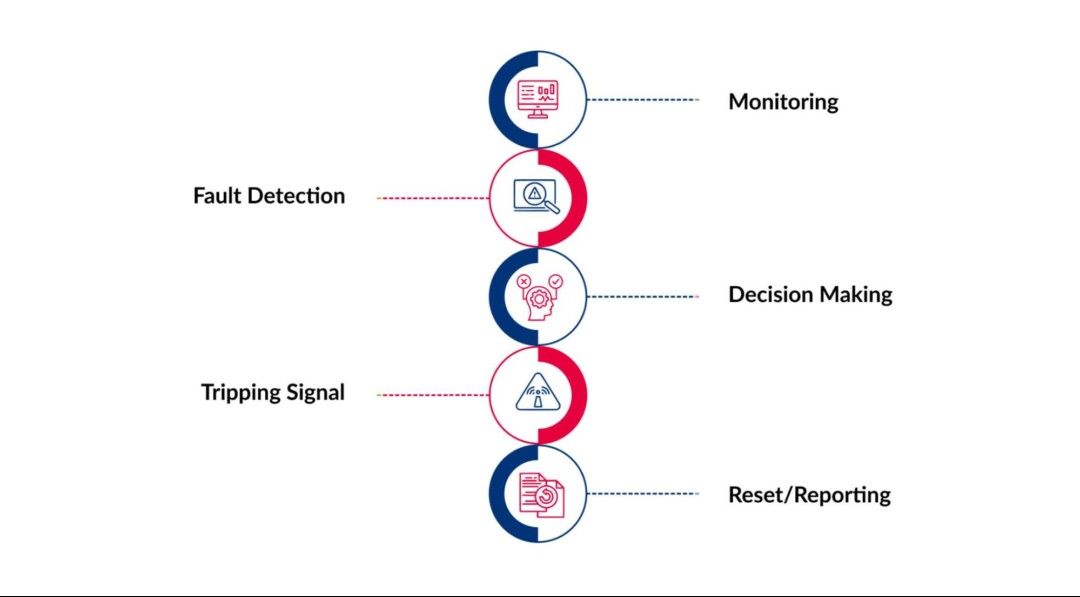
保护继电器通过持续监测电气参数、检测异常情况、做出决策并触发断路器来隔离故障部分。这一过程有助于保护设备、维持电力系统稳定,并确保人员和操作安全。
A protective relay operates by continuously monitoring electrical parameters, detecting abnormalities, making decisions, and triggering circuit breakers to isolate faulty sections. This process helps protect equipment, maintain power system stability, and ensure safety for personnel and operations.
监测
继电器使用电流互感器 (CT) 和电压互感器 (VT) 测量电压、电流、频率和其他参数。这些输入提供准确的实时数据,用于评估系统健康状况并在潜在故障升级之前识别它们。
Monitoring
The relay measures voltage, current, frequency, and other parameters using Current Transformers (CTs) and Voltage Transformers (VTs). These inputs provide accurate real-time data for assessing system health and identifying potential fault conditions before they escalate.
故障检测
该设备将实时测量值与预定义的阈值或设置进行比较。如果某个参数超过安全限值,继电器会立即将该事件标记为异常情况,确保不会遗漏任何不安全的电气情况。
Fault Detection
The device compares real-time measurements with predefined thresholds or settings. If a parameter exceeds the safe limit, the relay instantly flags the event as an abnormal condition, ensuring that no unsafe electrical situation goes unnoticed.
决策
一旦检测到异常情况,继电器的逻辑系统会决定是否需要隔离。它会考虑故障的严重程度、类型和位置等因素,以防止不必要的跳闸,并在需要采取行动时确保及时提供保护。
Decision Making
Once an abnormality is detected, the relay’s logic system decides whether isolation is necessary. It considers factors such as fault severity, type, and location to prevent unnecessary trips while ensuring timely protection when conditions demand action.
跳闸信号
如果需要隔离,继电器会向相应的断路器发送快速信号。断路器随后会将故障部分与电网断开,从而防止设备损坏并最大限度地减少对未受影响区域的影响。
Tripping Signal
If isolation is required, the relay sends a rapid signal to the associated circuit breaker. The breaker then disconnects the faulty section from the network, preventing damage to equipment and minimizing the impact on unaffected areas.
复位/报告
故障清除后,继电器会记录所有事件详情以供分析。根据设计,继电器可能自动复位,也可能需要人工干预,以确保能够检测未来的故障并持续保护系统。
Reset/Reporting
After the fault is cleared, the relay logs all event details for analysis. Depending on the design, it may reset automatically or require manual intervention, ensuring preparedness for future fault detection and continuous system protection.
保护继电器的类型
Types of Protective Relays
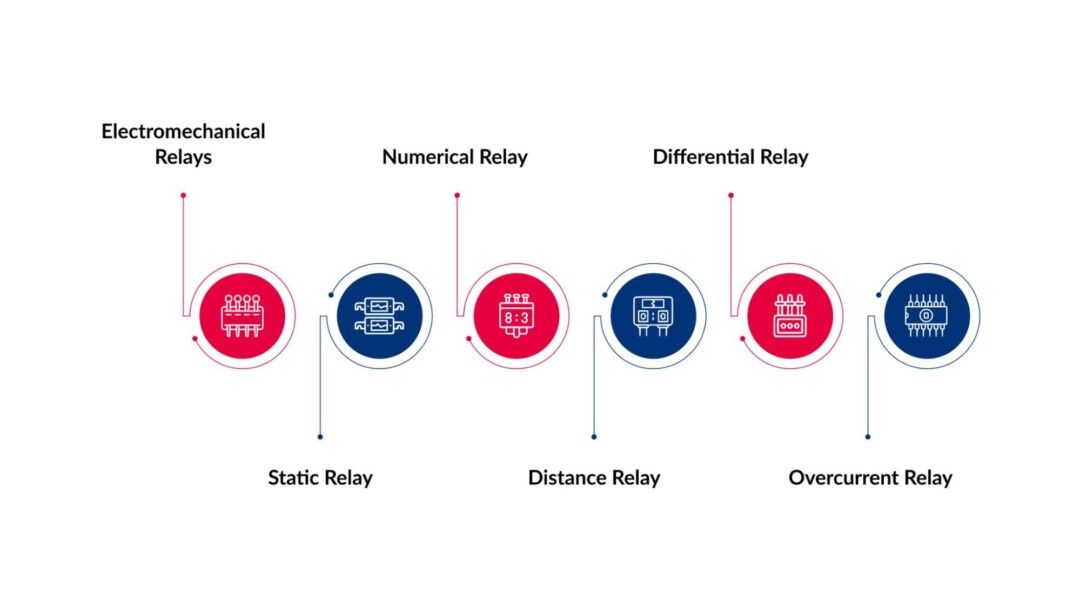
保护继电器与各种电气保护和控制装置(例如微型断路器 (MCB) 和塑壳断路器 (MCCB))配合使用,以维持系统稳定性并在故障情况下防止损坏。
Protective relays work in conjunction with various electrical protection and control devices, such as Miniature Circuit Breakers (MCBs) and Molded Case Circuit Breakers (MCCBs), to maintain system stability and prevent damage during fault conditions.
机电继电器
这些传统继电器利用磁感应或磁力驱动机械臂、触点和弹簧等部件运动。发生故障时,电气条件的变化会产生磁力,触发机械运动,从而打开或关闭触点,使断路器跳闸。
它们因其坚固耐用和能够应对恶劣的工作环境而备受青睐,但由于存在运动部件,因此需要定期校准和维护。
常见应用:用于尚未升级到电子或微处理器设计的传统电力系统、老旧工业设施和公用变电站。
Electromechanical Relays
These conventional relays operate using magnetic induction or attraction to physically move components such as arms, contacts, and springs. When a fault occurs, the change in electrical conditions generates a magnetic force that triggers mechanical movement, opening or closing contacts to trip the circuit breaker.
They are valued for their ruggedness and ability to handle harsh operating environments, but require periodic calibration and maintenance due to moving parts.
Common Applications: Used in legacy power systems, older industrial facilities, and utility substations where equipment has not yet been upgraded to electronic or microprocessor-based designs.
静态继电器
静态继电器使用晶体管、二极管和运算放大器等固态元件进行故障检测,无需运动部件。它们以电子方式处理电信号,从而提高了速度、精度和可靠性。
由于没有机械磨损,它们的维护成本低,并且与机电继电器相比,它们不易受到振动或灰尘等环境因素的损害。
常见应用:广泛应用于中压配电系统、工业自动化以及需要高速保护且维护量极少的环境。
Static Relay
Static relays use solid-state components, such as transistors, diodes, and operational amplifiers, to perform fault detection without moving parts. They process the electrical signal electronically, which increases speed, accuracy, and reliability.
The absence of mechanical wear makes them low-maintenance, and they are less prone to environmental damage from vibration or dust compared to electromechanical relays.
Common Applications: Widely applied in medium-voltage distribution systems, industrial automation, and environments requiring high-speed protection with minimal servicing.
数字继电器
这些先进的继电器基于微处理器,能够在单个设备中执行多种保护、控制和监控功能。它们使用数字算法分析系统参数,提供事件记录,运行自诊断,并可与SCADA和其他监控系统通信。
它们的可编程性允许针对不同的保护区域调整设置,并且可以与其他数字保护方案无缝集成。
常见应用:现代电网、可再生能源设施、智能变电站和集成网络保护,在这些应用中,多功能性和实时数据交换至关重要。
Numerical Relay
These advanced relays are microprocessor-based and capable of performing multiple protective, control, and monitoring functions in a single device. They analyze system parameters using digital algorithms, provide event recording, run self-diagnostics, and can communicate with SCADA and other supervisory systems.
Their programmability allows settings to be adjusted for different protection zones, and they can integrate seamlessly with other digital protection schemes.
Common Applications: Modern power grids, renewable energy facilities, smart substations, and integrated network protection, where multifunction capability and real-time data exchange are essential.
距离继电器
距离继电器通过测量继电器位置与故障点之间的阻抗来检测故障,该阻抗与沿导线的距离成正比。当测得的阻抗低于预设值时,继电器会认为故障位于其保护区域内,并发出跳闸指令。
由于距离继电器受负载电流的影响小于过电流继电器,因此在长线路保护中尤为有效。
常见应用:高压输电线路保护、长馈线电路以及大型互联网络中的选择性跳闸。
Distance Relay
Distance relays detect faults by measuring the impedance between the relay location and the fault point, which is proportional to the distance along the conductor. When the measured impedance falls below a preset value, the relay assumes the fault lies within its protection zone and issues a trip command.
They are particularly effective in long-line protection because they are less affected by load currents than overcurrent relays.
Common Applications: High-voltage transmission line protection, long feeder circuits, and selective tripping in large interconnected networks.
差动继电器
差动继电器的工作原理是比较流入和流出特定保护区域(例如变压器绕组、发电机定子或母线段)的电流。两者之间的任何差异都表明存在内部故障,并触发立即跳闸。
这种高速、高选择性的保护方法可确保快速清除内部故障,同时忽略外部干扰。
常见应用:变压器保护、发电机绕组保护、大型电机电路以及母线故障隔离。
Differential Relay
These relays operate on the principle of comparing the current entering and leaving a specific protection zone, such as a transformer winding, generator stator, or busbar section. Any difference between the two indicates an internal fault, triggering an immediate trip.
This high-speed and highly selective protection method ensures internal faults are cleared rapidly while external disturbances are ignored.
Common Applications: Transformer protection, generator winding protection, large motor circuits, and busbar fault isolation.
过电流继电器
当电路中的电流超过预设值并持续一定时间时,过电流继电器会动作。它可以配置为瞬时动作,在发生严重故障时立即跳闸;也可以配置为延时动作,以允许瞬时电流浪涌(例如电机启动)通过。
许多工业系统使用热过载继电器,这种继电器采用双金属片,当电流过大时,双金属片会因发热而弯曲。这种机械运动会触发跳闸机构,断开电机或电路,以防止过热和潜在的损坏。
过电流继电器结构简单、性能可靠,并有机电式、热式和电子式等多种设计,可满足各种保护需求。
常见应用:电机和馈线保护、配电变压器、低压和中压配电系统以及输电线路的后备保护。
Overcurrent Relay
An overcurrent relay operates when the current in a circuit exceeds a preset value for a specified period. It can be configured for instantaneous operation to trip immediately during severe faults, or for time-delayed operation to allow temporary current surges, such as motor starting.
Many industrial systems use thermal overload relays, which employ a bimetallic element that bends with heat generated by excessive current. This mechanical movement triggers the trip mechanism, disconnecting the motor or circuit to prevent overheating and potential damage.
Overcurrent relays are simple, dependable, and available in electromechanical, thermal, or electronic designs, making them adaptable to a wide range of protection needs.
Common Applications: Motor and feeder protection, distribution transformers, low- and medium-voltage distribution systems, and backup protection for transmission lines.
保护继电器的应用
Applications of Protective Relays
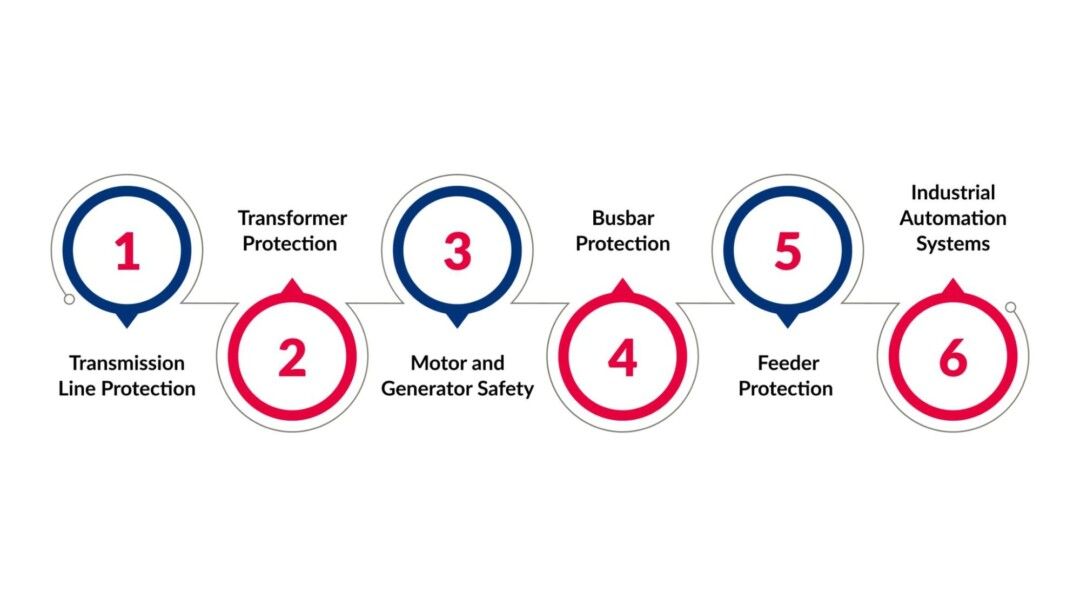
保护继电器在电力系统中至关重要,它们能够检测故障、隔离故障区域并防止大范围损坏。其应用范围涵盖高压输电、工业机械和自动化系统,确保在各种环境下的安全性和运行可靠性。
Protective relays are essential in power systems to detect faults, isolate problem areas, and prevent widespread damage. Their use spans high-voltage transmission, industrial machinery, and automated systems, ensuring both safety and operational reliability in diverse environments.
输电线路保护
保护继电器监测长距离高压输电线路的故障,例如短路或接地。快速隔离可防止基础设施损坏,避免大面积停电,并降低电网级联故障的风险。
Transmission Line Protection
Protective relays monitor long-distance high-voltage lines for faults like short circuits or grounding. Quick isolation prevents damage to infrastructure, avoids power loss to large areas, and reduces the risk of cascading failures in the electrical network.
变压器保护
继电器保护变压器免受过载、短路和绝缘击穿的影响。这种保护有助于防止昂贵的设备损坏,确保稳定的电压输出,并延长公用事业和工业电力系统中变压器的使用寿命。
Transformer Protection
Relays safeguard transformers from overloads, short circuits, and insulation breakdown. This protection helps prevent costly equipment damage, ensures stable voltage delivery, and prolongs the operational life of transformers in utility and industrial power systems.
电机和发电机安全
电机和发电机容易受到过电流、相序不平衡和过热的影响。保护继电器可以及早发现这些问题,触发停机,以避免机械损坏、生产损失以及对周围设备或操作人员造成危险。
Motor and Generator Safety
Motors and generators are vulnerable to overcurrent, phase imbalance, and overheating. Protective relays detect these issues early, triggering shutdowns to avoid mechanical damage, production losses, and hazards to surrounding equipment or operating personnel.
母线保护
母线承载着巨大的电流,其故障可能导致整个电力系统中断。继电器能够瞬间检测此类故障,从而快速隔离故障设备,保护连接的设备并维持整个电网的供电稳定性。
Busbar Protection
Busbars carry large amounts of current, and faults here can disrupt the entire power system. Relays detect such faults instantly, allowing rapid isolation to protect connected equipment and maintain supply stability across the electrical network.
馈线保护
馈线将电力从变电站分配到各个负载点。继电器能够检测馈线上的过载、短路和接地故障,确保故障在局部范围内被清除,而不会影响系统其他部分的性能或供电连续性。
Feeder Protection
Feeders distribute power from substations to load points. Relays detect overloads, short circuits, and earth faults on feeders, ensuring that faults are cleared locally without affecting the rest of the system’s performance or service continuity.
工业自动化系统
在自动化工厂中,保护继电器与控制系统集成,持续监测电气系统的运行状况。它们能够保护关键设备,最大限度地减少停机时间,并确保生产过程在正常和故障情况下都能安全高效地运行。
Industrial Automation Systems
In automated plants, protective relays integrate with control systems to monitor electrical health continuously. They protect critical machines, minimize downtime, and ensure production processes remain safe and efficient under both normal and fault conditions.
使用保护继电器的优势
Advantages of Using Protective Relays
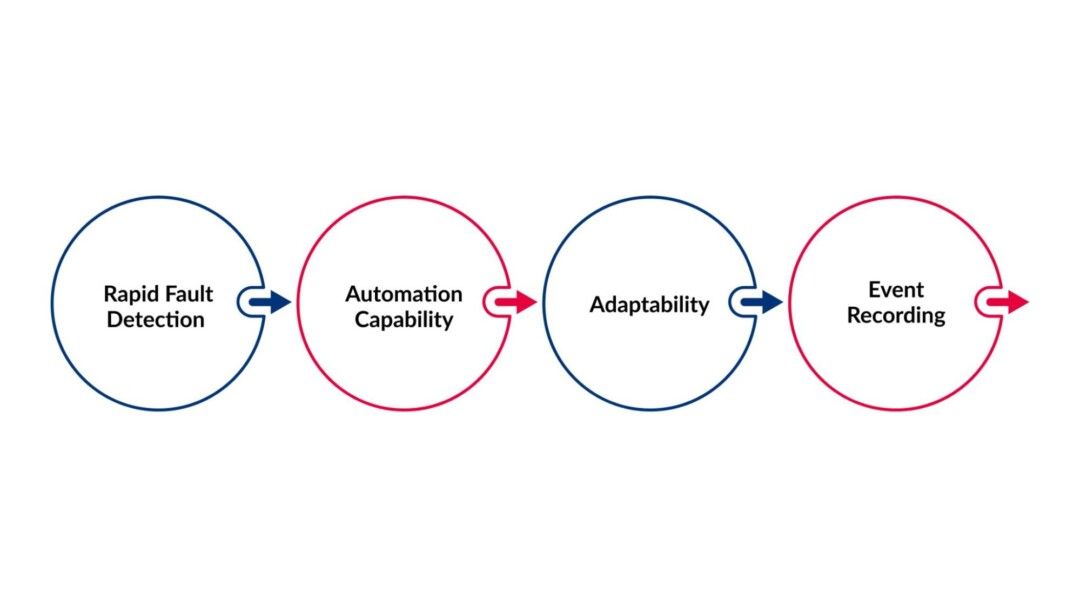
保护继电器具有多项优势,可提高电力系统的可靠性、效率和安全性。
Protective relays offer multiple benefits that enhance power system reliability, efficiency, and safety.
快速故障检测
保护继电器可在毫秒内做出响应,在故障扩散或造成严重损坏之前识别故障。这种快速反应最大限度地减少了对设备和运行的影响,确保人员安全,同时降低电力系统发生大规模停电或长时间停机的可能性。
Rapid Fault Detection
Protective relays respond within milliseconds, identifying faults before they spread or cause extensive damage. This fast reaction minimizes the impact on equipment and operations, ensuring safety for personnel while reducing the likelihood of large-scale blackouts or prolonged downtime in power systems.
自动化功能
配置完成后,保护继电器即可自动运行,无需人工监控。这种自动化功能可快速清除故障,避免可能使情况恶化的延误。它还能让操作人员专注于系统优化,而不是持续监控故障。
Automation Capability
Once configured, protective relays work automatically without requiring manual monitoring. This automation allows faults to be cleared swiftly, avoiding delays that could worsen conditions. It also frees operators to focus on system optimization instead of constant fault supervision.
适应性
现代保护继电器可以编程以响应特定的电气条件,使其适用于不同的应用。操作人员可以调整设置以保护多种故障类型,确保继电器在系统需求和负载变化时仍能有效工作。
Adaptability
Modern protective relays can be programmed to respond to specific electrical conditions, making them versatile for different applications. Operators can adjust settings to protect against multiple fault types, ensuring the relay remains effective as system requirements and load profiles change.
事件记录
许多高级继电器会存储详细的故障事件日志,使工程师能够调查故障原因和位置。这些信息有助于完善系统保护策略,防止问题再次发生,并改进维护计划,从而提高长期运行可靠性。
Event Recording
Many advanced relays store detailed logs of fault events, enabling engineers to investigate the cause and location of failures. This information helps refine system protection strategies, prevent repeat issues, and improve maintenance planning for long-term operational reliability.
保护继电器使用最佳实践
Best Practices for Using Protective Relays
遵循成熟的实践方法可确保保护继电器与开关设备和其他保护装置无缝协作,在保持系统稳定性的同时,实现快速、准确的故障隔离。
Adhering to proven practices ensures that protective relays work seamlessly with switchgear and other protection devices, delivering fast, accurate fault isolation while preserving system stability.
定期测试
定期进行功能测试可确认继电器运行正常,并在预期的时间范围内响应。这有助于及早发现校准漂移或故障组件,从而降低带电故障事件期间保护失效的风险,并保护下游开关设备。
Regular Testing
Scheduled functional tests confirm that relays are operating correctly and responding within the desired time frame. This helps detect calibration drift or faulty components early, reducing the risk of protection failures during live fault events and protecting downstream switching equipment.
正确协调
应合理规划继电器跳闸设定,确保每个保护装置按正确的顺序运行。这种顺序可有效隔离故障,并防止对系统其他未受影响部分造成干扰。
Correct Coordination
Relay trip settings should be planned to ensure each protection device operates in the right sequence. This sequencing isolates faults efficiently and prevents disruption to unaffected parts of the system.
定期校准
随着系统扩展、升级或负载变化,应重新校准继电器阈值。这有助于保持故障检测的准确性,并确保继电器响应始终针对所连接开关设备的性能和保护限值进行优化。
Periodic Calibration
As systems expand, upgrade, or experience changes in load profile, relay thresholds should be recalibrated. This preserves fault detection accuracy and ensures that relay response remains optimized for the connected switchgear’s capabilities and protection limits.
网络安全措施
对于连接到监控网络的数字继电器,强大的身份验证协议、加密和防火墙保护至关重要。这些措施可防止未经授权的访问更改继电器设置,从而保障系统完整性和切换操作的可靠性。
Cybersecurity Measures
For numerical relays connected to supervisory networks, strong authentication protocols, encryption, and firewall protection are essential. These measures prevent unauthorized access that could alter relay settings, safeguarding both system integrity and the reliability of switching operations.
保护继电器设置中的主要参数
Major Parameters in Protective Relay Settings
正确的继电器设置对于确保保护系统有效运行至关重要。诸如启动电流、延时和灵敏度等主要参数必须进行优化,以平衡故障检测速度和运行稳定性。
Correct relay settings are crucial for ensuring that protection systems work effectively. Major parameters like pickup current, time delays, and sensitivity must be optimized to balance fault detection speed with operational stability.
启动电流
启动电流定义了触发继电器动作的电流阈值。正确设置的启动电流可确保快速清除故障,同时避免在正常负载波动期间发生误跳闸。
设置过小会导致不必要的中断;设置过大则会延迟跳闸,从而可能损坏连接的开关设备和其他资产。
Pickup Current
It defines the current threshold that triggers the relay action. A correctly set pickup current ensures faults are cleared quickly while avoiding nuisance trips during normal load fluctuations.
Undersized settings can cause unnecessary interruptions; oversized settings can delay tripping, risking damage to connected switchgear and other assets.
延时拨盘设置
延时拨盘决定了继电器在检测到故障后发出跳闸指令前的等待时间。调整此延时有助于平衡快速清除故障和运行稳定性,使瞬时波动能够持续而不中断供电。
应根据系统负载特性、故障等级以及特定应用所需的保护顺序来选择设置。
Time Dial Setting
The time dial determines how long the relay waits after detecting a fault before issuing a trip command. Adjusting this delay helps balance fast fault clearance with operational stability, allowing momentary fluctuations to pass without interrupting service.
The setting should be chosen based on system load behavior, fault levels, and the protection sequence required for the specific application.
复位时间
复位时间决定了继电器在跳闸后恢复到正常监控状态的速度。较短的复位时间可提高对后续故障的响应速度,而较长的复位时间则有助于防止瞬态条件下的重复操作,从而避免开关设备的机械磨损。
Reset Time
Reset time determines how quickly the relay reverts to its normal monitoring state after a trip. Short reset times improve readiness for subsequent faults, while longer resets can help prevent repeated operations from transient conditions that could cause mechanical wear on switching devices.
灵敏度
灵敏度是指继电器对轻微电气异常的响应程度。高灵敏度可以检测到早期故障,防止故障升级,但在负载频繁变化的系统中,必须平衡灵敏度,以防止误跳闸和不必要的开关操作。
Sensitivity
It specifies how responsive the relay is to minor electrical anomalies. High sensitivity can catch early-stage faults before escalation, but in systems with frequent load changes, this must be balanced to prevent false tripping and unnecessary switch operations.
保护继电器面临的挑战
Challenges in Protective Relaying
应对这些挑战至关重要,以确保继电器按预期运行,并持续有效地保护电力系统。
Addressing these challenges is crucial to ensure relays function as intended and continue to safeguard power systems effectively.
协调问题
保护装置之间的动作顺序错误会导致可避免的停电。断路器或继电器动作顺序错误会导致系统更大范围的中断、停机时间增加以及潜在的设备压力。
Coordination Issues
Poor sequencing between protective devices can cause avoidable outages. When breakers or relays operate out of order, the result is wider system disruption, increased downtime, and potential equipment strain.
维护需求
与任何电气设备一样,保护继电器需要定期维护。灰尘积聚、机械磨损以及附近设备的振动会降低灵敏度或导致故障,因此定期检查对于确保继电器性能的稳定性和可靠性至关重要。
Maintenance Needs
Like any electrical device, protective relays require routine maintenance. Accumulated dust, mechanical wear, and vibrations from nearby equipment can reduce sensitivity or cause failures, making regular inspection essential for ensuring consistent and reliable relay performance.
网络安全风险
随着数字化和联网继电器的兴起,网络威胁已成为一个令人担忧的问题。未经授权的访问可以更改设置或禁用保护功能,如果故障发生时没有进行适当的隔离,则可能导致严重的损坏和安全隐患。
克服这些挑战需要技术、专业知识和可靠设备的正确组合。与经验丰富的保护解决方案提供商合作,可确保继电器和开关设备在关键运行期间完美运行。
Cybersecurity Risks
With the rise of digital and networked relays, cyber threats have become a concern. Unauthorized access can alter settings or disable protection, potentially leading to severe damage and safety hazards if faults occur without proper isolation.
Overcoming these challenges requires the right combination of technology, expertise, and reliable equipment. Partnering with a proven protection solutions provider ensures your relays and switchgear perform flawlessly during crucial operations.
声明:
-文章转载自LSELECTRICAMERICA,由爱泽工业翻译,如有侵权,请联系删除!
-如有偏颇,欢迎指正!
下一篇:工作原理:电压指示器(中英文)

 沪公网安备31011002006738号
