

工作原理:电压指示器(中英文)
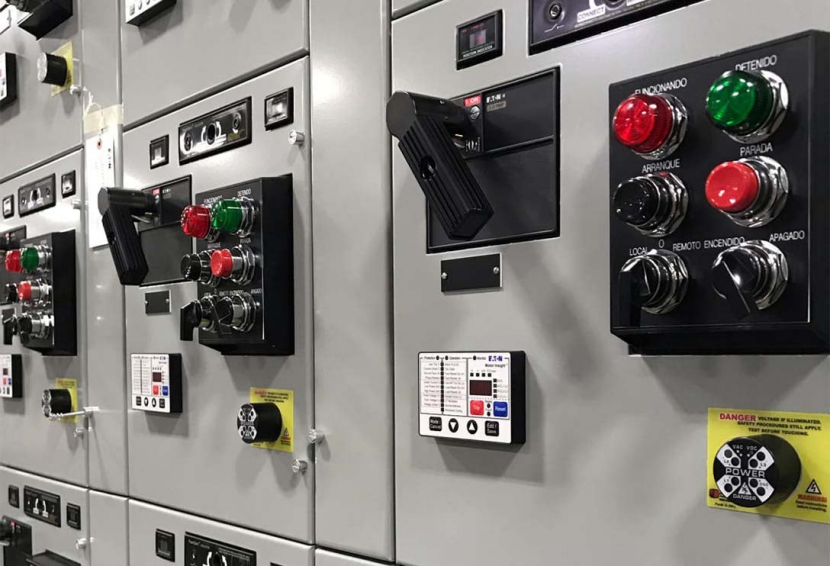
应对电气系统中的隐患
Addressing the Hidden Dangers in Electrical Systems
在许多工业和商业环境中,维护电气安全至关重要。然而,一个常被忽视的方面是配电盘中存在的电压,而未被检测到的电压可能造成严重风险。
未安装电压指示器的情况极易引发严重危险,包括触电、电弧闪光事故以及在维护工作进行过程中意外启动机械设备。这些风险可能导致人员受伤甚至死亡。安装可靠的电压检测安全机制可以显著降低这些风险,从而营造更安全的工作环境。
In many industrial and commercial settings, maintaining electrical safety is crucial. However, one often overlooked aspect is the presence of voltage in electrical panels that can pose severe risks when undetected.
Situations where voltage indicators are not installed are prime for severe hazards, including electrical shock, arc flash incidents, and the inadvertent activation of machinery while maintenance work is in progress. These risks can lead to injuries or even fatalities. The installation of reliable safety mechanisms to detect the presence of voltage can significantly mitigate these risks, promoting a safer working environment.
电压指示器在预防电气危险中的作用
The Role of Voltage Indicators in Preventing Electrical Hazards
电压指示器是一种低成本、高效的解决方案,旨在通过直接从配电盘外部清晰显示电压情况来提高安全性。这项简单而关键的功能使工作人员无需暴露于潜在的电气危险中即可确定是否存在电压。
Voltage indicators are low-cost, highly effective solutions designed to enhance safety by providing clear visibility of voltage presence directly from an electrical panel's exterior. This simple yet critical functionality allows personnel to determine if voltage is present without having to expose themselves to potential electrical hazards.
电压指示器的工作原理是什么?
How Do Voltage Indicators Work?
电压指示器是一种永久性电气安全装置 (PESD),它利用高阻抗电压检测电路来检测每一相电压。这些电路旨在检测交流/直流电压,并通过点亮 LED 来指示电压的存在。
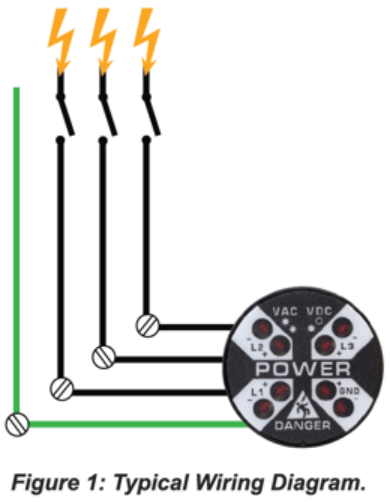
当电流流过至少两个这样的电路时,LED 就会亮起,整个过程随即开始。这一操作对于确保工作人员能够及时发现工作环境中的带电电路至关重要。图 1 展示了大多数电压指示器应用中常用的 480 VAC 三相系统的基本设置。
Voltage indicators are Permanent Electrical Safety Devices (PESDs) that utilize a high impedance voltage detection circuit for each phase. These circuits are designed to sense the AC/DC voltage and illuminate LEDs to indicate the presence of voltage.
The process begins when current flows through at least two of these circuits, allowing the LEDs to light up. This operation is pivotal in ensuring that workers are alerted to live circuits within their working environment. Figure 1 depicts the basic setup of a 480 VAC 3-Phase system as used in most voltage indicator applications.
电压指示器功能
Voltage Indicator Functionality
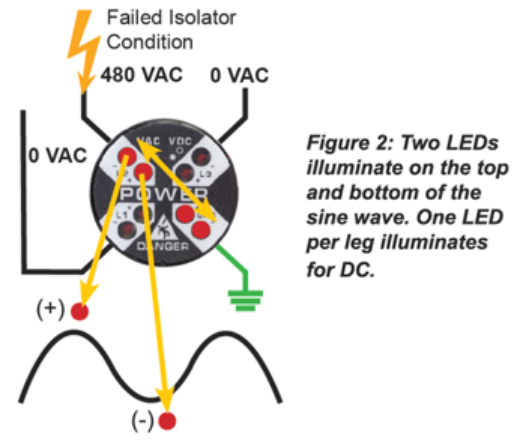
指示器内的每个电压检测电路都包含两个 LED:一个在交流正弦波的正半周亮起,另一个在负半周亮起。这种独特的配置确保多个 LED 的亮起能够指示电压的存在,从而增强可视性和安全性。图 2 展示了 LED 如何响应交流正弦波而亮起。
Each voltage detection circuit within the indicator includes two LEDs: one lights up during the positive half of the AC sine wave, and the other during the negative half. The unique configuration ensures that voltage presence is indicated by the illumination of multiple LEDs, enhancing visibility and safety. Figure 2 demonstrates how LEDs illuminate in response to AC sine waves.
正常情况下,当各相电压平衡时,指示接地(GND)连接的 LED 不会亮起。然而,当电压不平衡或缺相时,这些 GND LED 就成为至关重要的指示器。图 4 和图 5 分别展示了电压平衡和不平衡两种情况下 LED 的响应。
Under normal conditions, where the voltages are balanced across phases, LEDs indicating ground (GND) connection will not light up. However, in cases of voltage imbalance or phase loss, these GND LEDs become crucial indicators. Figures 4 and 5 demonstrate balanced and imbalanced phase conditions and the LED response.
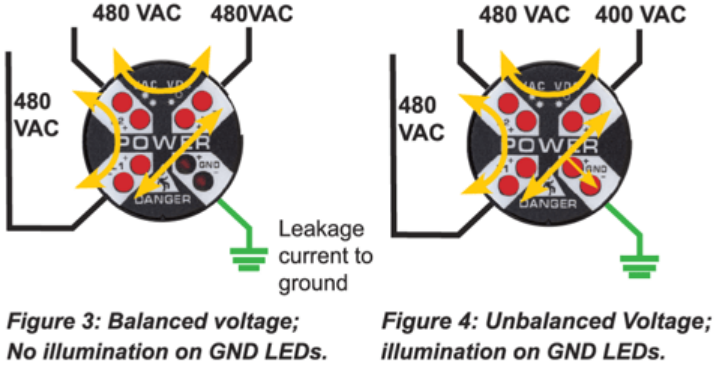
当出现不平衡的情况时,GND LED 会根据不平衡的程度亮起,立即提供视觉提示,表明出现了问题,从而可能防止危险情况的发生。
For scenarios where there is an imbalance, the GND LEDs light up according to the degree of imbalance, providing an immediate visual cue that something is amiss, which could potentially prevent hazardous situations.
高阻接地系统
High Resistance Ground System
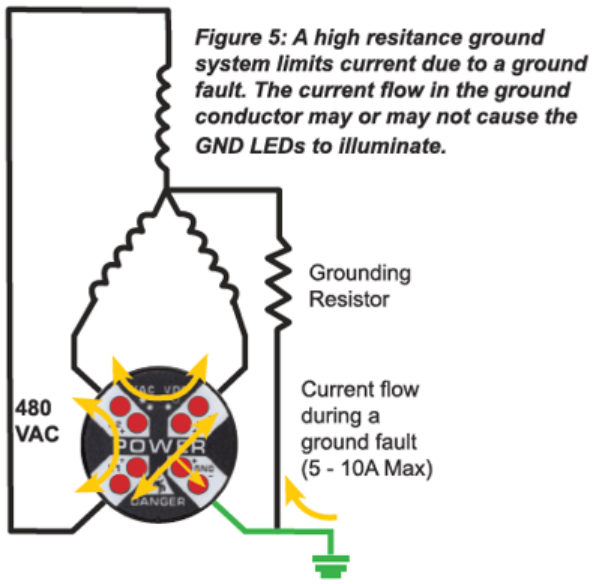
在高阻接地 (HRG) 系统或无接地系统中,电压指示器的运行情况略有不同。在 HRG 系统中,故障引起的接地电流会导致 GND LED 指示灯亮起,但这并不一定表示存在接地故障,而是表明存在杂散电压。图 5 显示了 HRG 系统中的指示器响应。
In environments with high resistance ground (HRG) systems or ungrounded systems, the operation of voltage indicators slightly varies. In HRG systems, ground currents induced by faults can cause GND LEDs to illuminate, which does not necessarily indicate a ground fault but rather the presence of stray voltages. Figure 5 shows the indicator response in HRG systems.
未接地系统
Ungrounded Systems
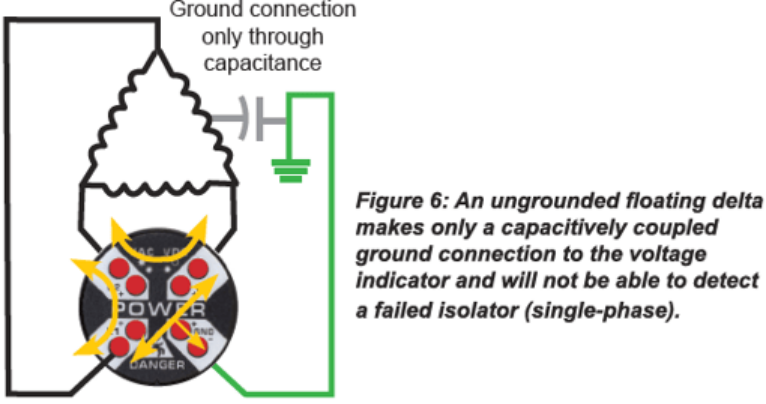
在未接地系统中,由于缺少硬线接地连接,电压指示器的功能受到限制。这种设置需要对接地连接进行额外的验证,以确保安全。图 6 展示了未接地系统面临的挑战。
In ungrounded systems, the lack of a hardwired ground connection limits the functionality of voltage indicators. This setup necessitates additional verification for ground connections to ensure safety. Figure 6 illustrates the challenges with ungrounded systems.
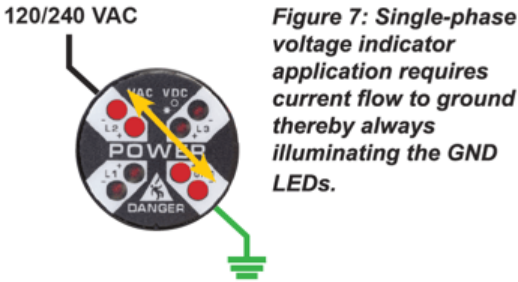
LED 灯亮起表示存在电压。电压本身不区分状态,电压指示器也不例外。电压指示器的 GND 引脚采用安全接地参考,可确保在隔离器故障或单相供电的情况下 LED 灯也能亮起(分别如图 2 和图 7 所示)。
LED illumination means that voltage exists. Voltage does not discriminate, so neither does a voltage indicator. A safe ground reference for the GND leg of the voltage indicator ensures that the LEDs illuminate in an isolator failure or single-phase condition (Figures 2 & 7, respectively).
如果没有接地连接,LED 照明电路就无法形成闭合回路。如果安装后 GND 指示灯不亮,可以尝试拔掉保险丝或断开一根电压指示线,这样就能使电流流向地线,从而测试接地连接的完整性。
Without a ground connection, there would be no path to complete the LED illumination circuit. If the GND LEDs do not illuminate after installation, pulling a fuse or disconnecting one voltage indicator lead wire should allow current flow to the ground thereby testing the integrity of the ground connection.
关于电压指示器 (PESDs)
About Voltage Indicator PESDs
电压指示器是自供电、通过 UL 认证的永久安装设备,它通过闪烁或常亮的冗余 LED 指示灯来直观地提示电压的存在。
电压指示器通常硬线连接到电力馈线或隔离开关的负载侧。当任何相中存在危险电压时,电压指示器都会亮起,除了满足 OSHA 在 29 CFR 1910.147 中的要求外,还可以帮助验证电压是否存在。
Voltage indicators are self-powered, UL listed, and permanently installed devices that visually alert the presence of voltage with flashing or non-flashing, redundant LED indication lights.
Typically hardwired to the load side of an electrical feeder or a disconnect switch, voltage indicators illuminate whenever hazardous voltage is present in any individual phase and can assist in verifying voltage presence in addition to OSHA’s requirements in 29 CFR
1910.147.
电压指示器及其他
Voltage Indicators and Beyond
电压指示器对于指示是否存在电压至关重要,但不能仅凭电压指示器来确认是否存在电压。对于需要验证断电状态的任务,例如在锁定/挂牌 (LOTO) 程序中,则需要使用其他工具,例如获得 UL 认证的 ChekVolt。
ChekVolt 是一款独特的 PESD(电源安全检测设备),它将电压指示器与符合 NFPA 70E 120.6(7) 标准的防触电、防万用表兼容的高阻抗保护测试点相结合。该设备可确保合格人员能够安全地执行断电测试。
While voltage indicators are invaluable for indicating the presence of voltage, they should not be relied upon to confirm the absence of voltage. For tasks requiring verification of a de-energized state, such as during Lockout/Tagout (LOTO) procedures, additional tools like the UL Listed ChekVolt are necessary.
The ChekVolt is a unique PESD that combines voltage indicators with touch-safe and multimeter-compatible high impedance protected test points, compliant with NFPA 70E 120.6(7). This device ensures that a qualified person can safely perform an absence of voltage test.

声明:
-文章转载自GRACE,由爱泽工业翻译,如有侵权,请联系删除!
-如有偏颇,欢迎指正!

 沪公网安备31011002006738号
