

一文读懂继电器:电气系统的 “隐形开关” 与核心守护者(中英文)
随着现代电力系统日益自动化和复杂化,继电器虽然体积小巧,却在确保系统功能、保护和控制方面发挥着至关重要的作用。但究竟什么是电气工程中的继电器呢?
预计到2027年,全球保护继电器市场规模将达到65亿美元,年复合增长率达5.2%。这一增长反映了工业、公用事业和商业领域对可靠的电气保护和自动化系统日益增长的需求。
本文将探讨什么是电气继电器、其工作原理、不同类型的继电器、继电器符号、接线图以及典型的实际应用。
As modern power systems become more automated and complex, relays, though small, play a vital role in ensuring functionality, protection, and control. But what exactly is a relay in electrical engineering?
The global protective relay market is expected to reach USD 6.5 billion by 2027, growing at a CAGR of 5.2%. This surge reflects the growing need for reliable electrical protection and automated systems in industrial, utility, and commercial sectors.
Here we’ll discuss what an electrical relay is, how it works, the different types of relays, their symbols, wiring diagrams, and typical real-world applications.
什么是继电器?
What is a Relay?
继电器是一种电控开关,用于控制各种电子和电气系统中的电路。与需要人工操作才能打开或关闭电路的手动开关不同,继电器能够根据电信号自动工作。当向继电器线圈施加一个较小的输入信号时,它会产生一个磁场,该磁场会移动内部触点,从而接通或断开连接到单独的、通常功率更高的负载的电路。
其原理类似于接力赛中的接力棒传递。一个组件接收信号并将其传递给另一个组件。这使得低压控制电路能够在无需直接电气接触的情况下安全高效地管理更大的电压或电流。当需要电气隔离、远程控制或自动切换时,继电器至关重要。
无论是启动电机、激活前大灯,还是管理变电站中的电力流,继电器都是现代自动化和安全系统不可或缺的一部分。其设计实现了精确控制、快速切换和可靠运行,使其成为工业电网的关键组成部分。
A relay is an electrically operated switch that controls circuits in various electronic and electrical systems. Unlike manual switches, which require human interaction to open or close a circuit, relays function automatically in response to an electrical signal. When a small input signal is applied to the relay’s coil, it generates a magnetic field that moves internal contacts, either completing or interrupting the circuit connected to a separate, usually higher-power load.
The concept is similar to a baton pass in a relay race. One component receives the signal and passes it along to another. This allows a low-voltage control circuit to safely and efficiently manage much larger voltages or currents without direct electrical contact. Relays are critical when electrical isolation, remote control, or automatic switching are required.
Relays are essential to modern automation and safety systems, whether turning on a motor, activating headlights, or managing power flow in a substation. Their design allows for precise control, quick switching, and reliable operation, making them crucial in industrial power grids.
继电器的工作原理是什么?
How Does an Electrical Relay Work?
继电器是一种机电开关,它利用较小的输入信号来控制较大的负载。继电器的设计将控制电路与高功率电路隔离,从而确保安全性和自动化。以下是继电器的工作原理及步骤:
An electrical relay operates as an electromechanical switch that uses a small input signal to control a much larger electrical load. The relay’s design isolates control circuitry from high-power circuits, ensuring safety and automation. Here’s a breakdown of its working components and steps:
继电器的主要部件
1. 电磁铁(线圈):这是继电器的核心部件。当电流通过线圈时,会产生磁场。
2. 可移动衔铁:位于线圈附近,当线圈被磁化时,这个金属杆会被拉向线圈。
3. 触点(常开或常闭):这些触点用于打开或关闭,从而允许或阻止输出电路中的电流。
4. 弹簧:当线圈断电时,弹簧使衔铁复位。
Major Components of a Relay
1. Electromagnet (Coil): This is the heart of the relay. When electrical current passes through the coil, it creates a magnetic field.
2. Movable Armature: Positioned near the coil, this metal lever is pulled toward the coil when magnetized.
3. Contacts (Normally Open or Normally Closed): These are the points that open or close to either allow or block current in the output circuit.
4. Spring: This returns the armature to its original position when the coil is de-energized.
继电器工作原理:
1. 输入信号:低压电信号(例如,来自传感器或微控制器)被发送至继电器线圈。
2. 磁场产生:线圈通电,产生磁场。
3. 衔铁运动:磁场将衔铁拉向线圈。此动作会闭合常开触点或常闭触点。
4. 电路控制:触点的运动会接通或断开外部大功率电路。这使得连接的设备(例如电机、风扇或灯)可以通电或断电。
5. 复位:一旦输入信号移除,线圈断电,磁场消失,弹簧将衔铁拉回原位,继电器复位至默认状态。
Steps in Relay Operation:
1. Input Signal: A low-voltage electrical signal (e.g., from a sensor or microcontroller) is sent to the relay’s coil.
2. Magnetic Field Generation: The coil energizes, generating a magnetic field.
3. Armature Movement: The magnetic field pulls the armature toward the coil. This action either closes a normally open or a normally closed contact.
4. Circuit Control: The movement of the contacts completes or interrupts the external high-power circuit. This allows the connected device, such as a motor, fan, or light, to be powered on or off.
5. Reset: Once the input signal is removed, the coil is de-energized, the magnetic field disappears, and the spring pulls the armature back, resetting the relay to its default state.
电气继电器的类型
Types of Electrical Relays
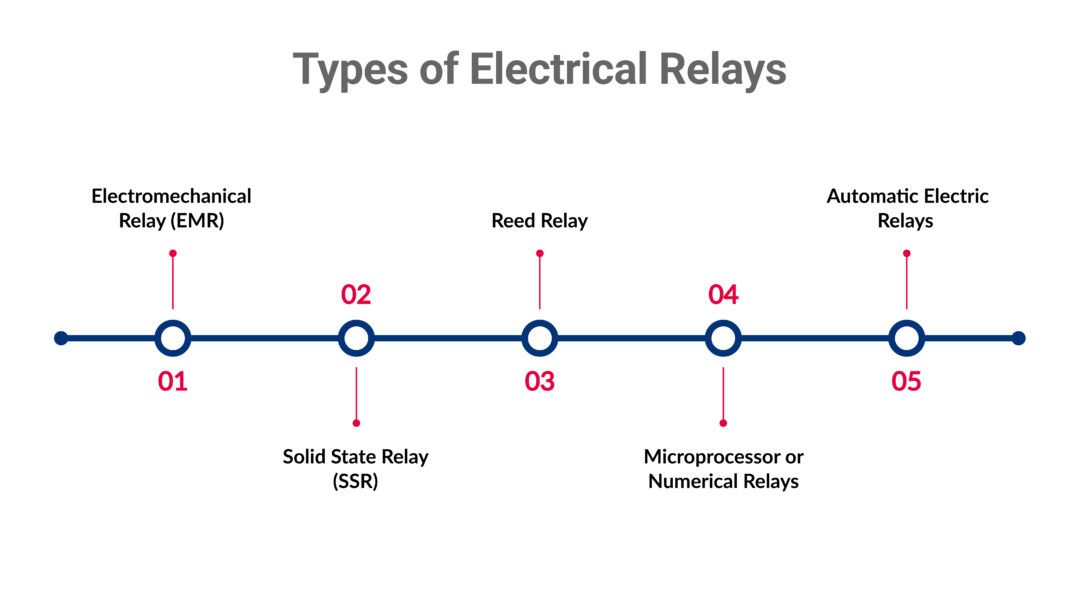
电气系统中会用到多种类型的继电器。每种继电器都根据电流、电压、定时或应用需求具有特定的功能。
Several types of relays are used in electrical systems. Each has a specific function based on current, voltage, timing, or application requirements.
机电继电器 (EMR)
机电继电器利用磁线圈来物理地打开或关闭触点,从而接通或断开电路。这类继电器以其可靠性、易于故障排除以及能够处理交流和直流负载而著称。它们广泛应用于自动化、家用电器和暖通空调系统,但机械磨损会缩短其使用寿命。
特点:
• 切换时发出咔嗒声
• 能够切换交流和直流负载
• 易于故障排除和更换
应用:
• 工业自动化
• 家用电器
• 暖通空调系统
Electromechanical Relay (EMR)
An electromechanical relay uses a magnetic coil to physically open or close contacts, creating or interrupting a circuit. These relays are known for their reliability, easy troubleshooting, and versatility in handling AC and DC loads. They’re widely used in automation, home appliances, and HVAC systems, though mechanical wear can limit lifespan.
Features:
• Audible click when switching
• Capable of switching AC and DC loads
• Easy to troubleshoot and replace
Applications:
• Industrial automation
• Home appliances
• HVAC systems
固态继电器 (SSR)
固态继电器使用晶闸管或双向可控硅等半导体元件进行切换,无需移动部件。与传统继电器相比,这种设计使其运行速度更快、噪音更低、更耐用。固态继电器 (SSR) 非常适合用于微控制器、精密电子设备或高速开关任务,但由于其散热特性,可能需要散热器。
特点:
• 静音运行
• 无机械磨损
• 快速开关
• 高可靠性
应用:
• 精密设备
• 高速控制电路
• 电子和微处理器接口
Solid State Relay (SSR)
A solid-state relay uses semiconductor components like thyristors or triacs to switch without moving parts. This design allows faster, quieter, and more durable operation than conventional relays. SSRs are ideal for applications involving microcontrollers, sensitive electronics, or high-speed switching tasks, though they may require heat sinks due to thermal buildup.
Features:
• Silent operation
• No mechanical wear
• Fast switching
• High reliability
Applications:
• Sensitive equipment
• High-speed control circuits
• Electronics and microprocessor interfaces
簧片继电器
簧片继电器包含两个密封在玻璃管内的磁性金属簧片。当线圈通电时,簧片相互吸引,从而接通电路。这些继电器结构紧凑、开关速度快、经久耐用,因此适用于电信、医疗设备、测试系统以及需要低功耗和高可靠性的电路。
特点:
• 极快的切换速度
• 超长使用寿命
• 紧凑的尺寸
应用:
• 电信
• 测试设备
• 安全电路
Reed Relay
A reed relay contains two magnetic metal reeds sealed inside a glass tube. When the coil is energized, the reeds attract each other and complete the circuit. These relays are compact, fast-switching, and highly durable, making them suitable for telecommunications, medical equipment, test systems, and circuits requiring low power and high reliability.
Features:
• Very fast switching
• Long operational life
• Compact size
Applications:
• Telecommunication
• Test equipment
• Safety circuits
微处理器或数字继电器
微处理器或数字继电器是用于保护和控制系统的先进器件。它们利用嵌入式系统和数字处理技术来监测电气参数、检测故障并提供实时保护。这些继电器经过编程,可以执行复杂的逻辑功能,从而在保护电气系统方面提供更高的精度和灵活性。
特点:
• 先进的保护算法
• 数字信号处理
• 灵活性和可定制性
• 通信功能
应用:
• 电机保护
• 电力系统
• 自动化系统
• 可再生能源系统
• 智能电网
Microprocessor or Numerical Relays
Microprocessors or numerical relays are advanced devices used in protection and control systems. They utilize embedded systems and digital processing to monitor electrical parameters, detect faults, and provide real-time protection. These relays are programmed to perform complex logic functions, offering greater precision and flexibility in protecting electrical systems.
Features:
• Advanced Protection Algorithms
• Digital Signal Processing.
• Flexibility and Customization
• Communication Capabilities
Applications:
• Motor Protection
• Power Systems
• Automation Systems
• Renewable Energy Systems
• Smart Grids
自动继电器
自动继电器无需人工干预即可执行切换操作。它们监测系统参数,并根据预设条件触发保护或控制功能。
自动化继电器是电网现代化改造的关键组成部分。自动继电器能够快速检测故障,减少数据中心和可再生能源系统等高需求环境中的停机时间。
这些继电器通常与以下系统集成:
• SCADA 系统
• 可编程逻辑控制器 (PLC)
• 远程监控系统
自动继电器通过实现复杂电气系统的快速响应和免人工控制,提高效率和安全性。它们与 SCADA、PLC 和远程监控工具集成,在现代能源基础设施中发挥着至关重要的作用,尤其是在智能电网、数据中心和可再生能源系统中,能够确保快速故障检测并最大限度地减少运行中断。
Automatic Electric Relays
Automatic relays perform switching operations without manual intervention. They monitor system parameters and trigger protective or control functions based on preset conditions.
The automation relay segment is essential for innovative grid modernization. Automatic electric relays enable fast fault detection and reduce downtime in high-demand environments like data centers and renewable energy systems.
These relays are often integrated with:
• SCADA systems
• Programmable Logic Controllers (PLCs)
• Remote monitoring systems
Automatic electric relays enhance efficiency and safety by enabling responsive, hands-free control in complex electrical systems. Integrated with SCADA, PLCs, and remote monitoring tools, they play a vital role in modern energy infrastructure, especially in smart grids, data centers, and renewable systems, by ensuring fast fault detection and minimizing operational disruptions.
电气继电器的应用
Applications of Electrical Relays
继电器广泛应用于住宅、商业、工业和汽车领域。其多功能性和可靠性使其成为现代电气系统中不可或缺的组成部分。
Relays are widely used in residential, commercial, industrial, and automotive sectors. Their versatility and reliability make them indispensable in modern electrical systems.
工业车辆控制系统
继电器对于控制工业车辆(例如叉车、起重机、矿用卡车和工程机械)的电气系统至关重要。这些车辆通常需要大电流开关来驱动液压泵、照明系统和冷却风扇等部件。
继电器使用低压控制信号,确保这些高需求系统在恶劣环境下可靠安全地运行。这有助于保护控制电路免受电涌冲击,同时支持工业车队运营中的自动化、远程诊断和系统正常运行时间。
Industrial Vehicle Control Systems
Relays are essential in controlling electrical systems within industrial vehicles such as forklifts, cranes, mining trucks, and construction machinery. These vehicles often require high-current switching for components like hydraulic pumps, lighting systems, and cooling fans.
Relays use low-voltage control signals to enable the reliable and safe operation of these high-demand systems in rugged environments. This helps protect control circuits from electrical surges while supporting automation, remote diagnostics, and system uptime in industrial fleet operations.
工业过程控制器
在工业自动化中,继电器控制电机、泵和传送带。它们能够实现安全开关和电路隔离,这对于管理复杂的工作流程、提高生产率以及减少因过载或故障导致的系统故障至关重要。
Industrial Process Controllers
In industrial automation, relays control motors, pumps, and conveyor belts. They enable safe switching and circuit isolation, which are vital in managing complex workflows, improving productivity, and reducing system failures due to overloads or faults.
电力系统保护
电气继电器在电力传输和分配系统中用作保护装置。它们能够检测过电流、欠压或短路等故障,并触发断路器以防止变压器、馈线和连接设备损坏。
Power System Protection
Electrical relays act as protective devices in power transmission and distribution systems. They detect faults like overcurrent, under-voltage, or short circuits, and trigger circuit breakers to prevent damage to transformers, feeders, and connected equipment.
照明控制系统
继电器广泛应用于商业和工业照明系统,例如工厂、仓库和智能建筑。它们与人体感应器、楼宇管理系统 (BMS) 或可编程控制器集成,以实现自动化控制、定时切换和节能。这种自动化提高了运行效率,降低了能源成本,并增强了大型照明装置的安全性。
Lighting Control Systems
Relays are widely used in commercial and industrial lighting systems, such as factories, warehouses, and smart buildings. They integrate with occupancy sensors, building management systems (BMS), or programmable controllers to enable automated control, scheduled switching, and energy efficiency. This automation improves operational efficiency, reduces energy costs, and enhances workplace safety in large-scale lighting installations.
使用继电器的优势
Advantages of Using Relays
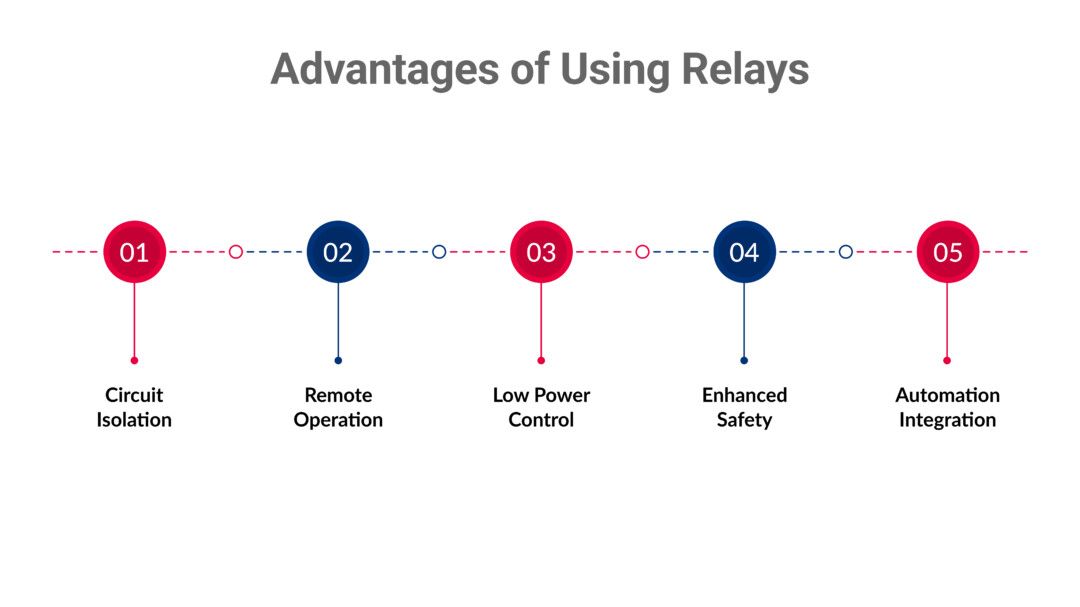
继电器在简单和复杂的电气系统中都扮演着至关重要的角色。它们能够利用低功率信号控制高功率电路,从而在安全性、效率和可靠性方面带来诸多优势。
Relays play a crucial role in both simple and complex electrical systems. Their ability to control high-power circuits with low-power signals offers several advantages in safety, efficiency, and reliability.
电路隔离
继电器将控制电路与负载电路进行电气隔离,保护敏感元件免受电压尖峰、噪声或过载的影响,确保控制侧的安全运行。
Circuit Isolation
Relays electrically isolate the control circuit from the load circuit, protecting sensitive components from voltage spikes, noise, or overloads, ensuring the control side remains safe and operational.
远程操作
继电器支持远程操作电路,使其成为自动化系统的理想选择。在自动化系统中,开关或传感器无需直接布线即可远距离控制设备。
Remote Operation
Relays allow circuits to be operated remotely, making them ideal for automation systems, where switches or sensors control devices at a distance without requiring direct wiring.
低功率控制
继电器能够利用低功率输入信号切换高电流负载,从而实现对汽车系统、家用电器和工业设备等设备的高效控制。
Low Power Control
A low-power input signal can switch high-current loads with relays, enabling efficient control in devices like automotive systems, home appliances, and industrial equipment.
增强安全性
继电器能够瞬间断开故障电路,最大限度地降低火灾隐患、设备损坏或触电风险,从而有助于提高家庭、车辆和工业电气系统的安全运行。
Enhanced Safety
By instantly disconnecting faulty circuits, relays minimize fire hazards, equipment damage, or electric shock risks, contributing to the safer operation of electrical systems in homes, vehicles, and industries.
自动化集成
继电器与可编程逻辑控制器 (PLC) 和智能系统兼容,使其成为工业自动化和智能电网技术中用于优化能源管理的核心组件。
Automation Integration
Relays are compatible with programmable logic controllers (PLCs) and intelligent systems, making them a core component in industrial automation and smart grid technologies for optimized energy management.
选择继电器时需要考虑的因素
Things to Consider When Selecting an Electrical Relay
电压和电流额定值
确保继电器的额定值与系统的输入和负载要求相符。额定值不符会导致故障或损坏,尤其是在高负载电路或功率变化较大的环境中。
Voltage and Current Ratings
Ensure the relay’s ratings align with your system’s input and load requirements. Incorrect ratings can lead to malfunction or damage, especially in high-demand circuits or variable power environments.
负载类型
感性负载和阻性负载在开关操作下的表现不同。根据控制的是电机、加热器还是其他类型的负载,选择具有合适的电弧抑制或耐久性特性的继电器。
Type of Load
Inductive and resistive loads behave differently under switching. Choose relays with suitable arc suppression or durability features depending on whether you’re controlling motors, heaters, or other load types.
响应时间
对于快速开关应用,请使用延迟最小的继电器,例如固态继电器 (SSR) 或簧片继电器。这可以确保在自动化、安全电路或信号处理等对时间要求较高的系统中实现精确控制。
Response Time
For fast-switching applications, use relays with minimal delay, such as SSRs or reed types. This ensures accurate control in time-sensitive systems like automation, safety circuits, or signal processing.
环境条件
恶劣的环境需要使用密封式或固态继电器,以抵抗潮湿、灰尘和温度波动。务必考虑运行环境,以避免过早失效或安全问题。
Environmental Conditions
Harsh conditions require sealed or solid-state relays that resist moisture, dust, and temperature fluctuations. Always consider the operating environment to avoid premature failure or safety issues.
安装方式
继电器的安装方式(例如 DIN 导轨、PCB 或插入式)会影响安装、维护和空间占用。根据面板布局、易用性需求和系统可扩展性进行选择。
Mounting Style
Relay mounting options—such as DIN rail, PCB, or plug-in—affect installation, maintenance, and space usage. Choose based on your panel layout, accessibility needs, and system scalability.
认证
请查找 UL、CE 或 IEC 认证,以确保符合地区和行业标准。经认证的继电器满足商业和工业用途所需的安全性和性能标准。
Certifications
Look for UL, CE, or IEC certifications to ensure regional and industry standards compliance. Certified relays meet required safety and performance benchmarks for commercial and industrial use.
声明:
-文章转载自LSELECTRICAMERICA,由爱泽工业翻译,如有侵权,请联系删除!
-如有偏颇,欢迎指正!

 沪公网安备31011002006738号
